




Modular Hotel Construction: A Guide for Hotel Developers and Operators
Modular hotel construction means building hotel rooms as finished modules in a factory and installing them on site. Hotels are one of the strongest uses of modern methods of construction: rooms repeat, brand standards are tightly defined and every week saved on site is a week of trading gained. This guide covers how modular hotels are delivered, the decisions owners and operators need to make, and lessons from the modular hotels we have worked on.
Quick answer
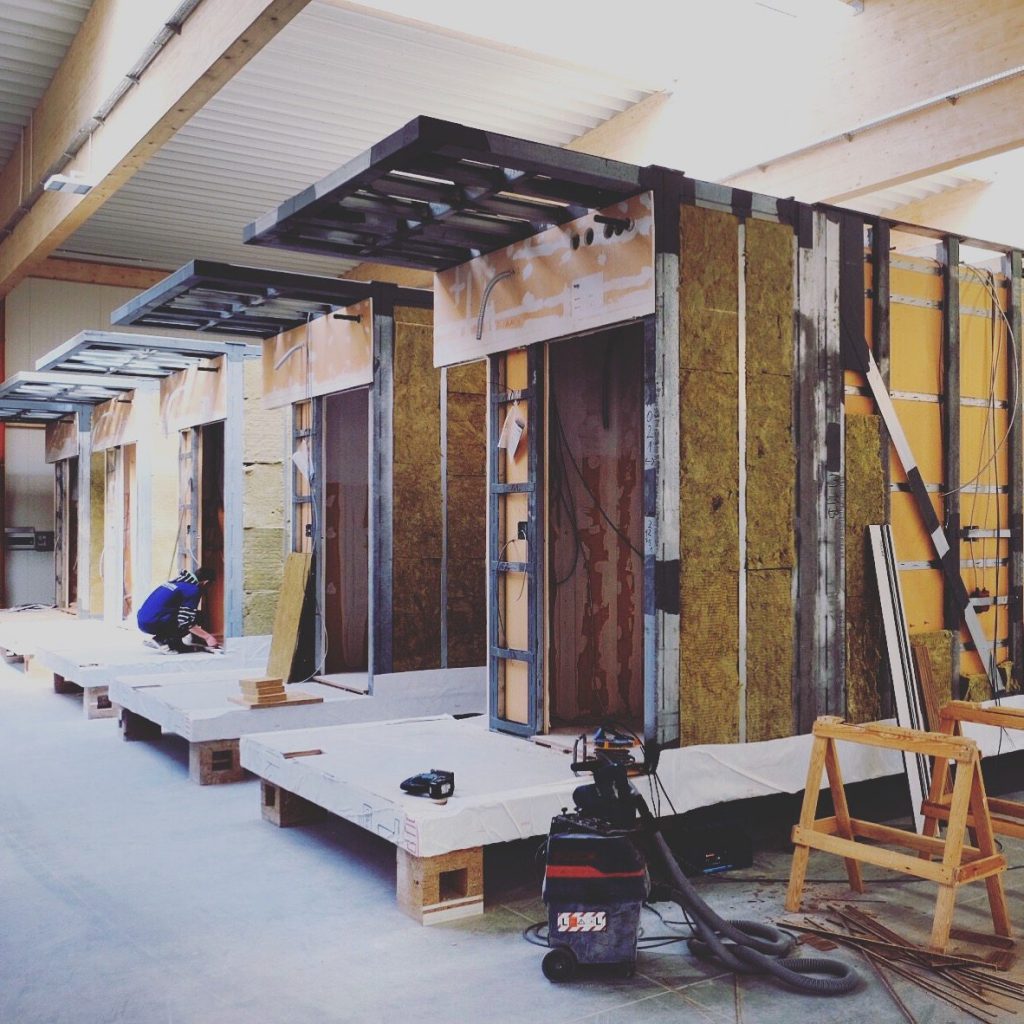
- Guest rooms and bathrooms are built, fitted out and checked in the factory while foundations, ground floor and cores are built on site.
- The main gains are a shorter programme, consistent room quality and less disruption, which matters on busy city-centre sites.
- Public areas such as lobbies, restaurants and back of house are usually built traditionally or with panels.
- Success depends on agreeing the room design, brand standards and module grid at feasibility.
Why hotels suit modular construction
Repetition. A hotel may have hundreds of near-identical rooms. One well-designed module type can be repeated many times, which is ideal for factory production.
Speed to opening. Rooms are made in the factory while the site is prepared, so the hotel can open earlier and start trading sooner.
Brand consistency. Operators have detailed standards for rooms and bathrooms. Factory production makes it easier to deliver the same finish in every room, and to test a prototype room before production starts.
Difficult sites. Fewer deliveries and a shorter time on site help on constrained urban sites, next to live railways or beside hotels that stay open.
How a modular hotel is delivered
- Feasibility: test the site, room numbers, module sizes, crane and delivery access, and the business case.
- Room design and brand sign-off: design the guest room and bathroom around the module and agree it with the operator early.
- Planning: set out the building on the module grid so the consent can be built as approved.
- Procurement: appoint the module manufacturer, usually alongside a main contractor for the ground floor, cores and façade.
- Prototype room: build a sample room in the factory for the operator to review before full production.
- Manufacture and installation: modules are produced, inspected, delivered and craned into place, often several floors a week.
- Completion: connections, façade, public areas, commissioning and handover to the operator.
Design decisions to get right early
Room size and module grid
Room width and length are set by the module and by what can travel by road. The corridor can be built into the module or added on site. For typical room sizes by hotel type, see our guide to DfMA hotel design and average hotel room sizes.
Transfer structure at ground floor
Lobbies, restaurants and meeting rooms need bigger spans than guest rooms. These are usually built in steel or concrete, with a transfer structure on which the modules sit.
Façade
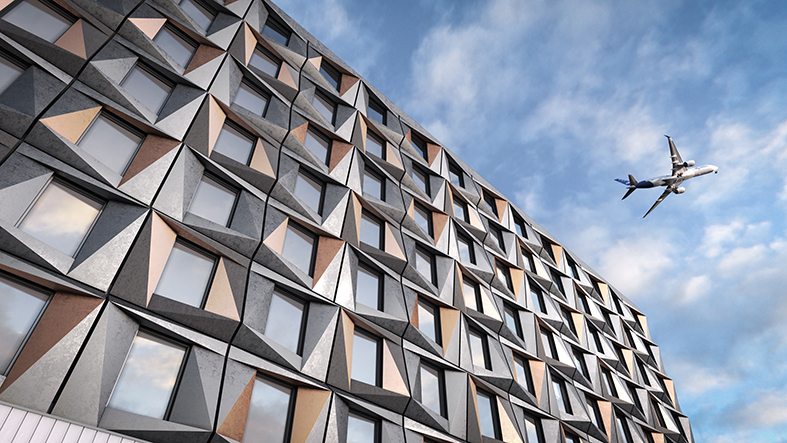
The façade can be fixed to the modules in the factory or added on site. A prefabricated façade, as at Hampton by Hilton Reading, keeps the speed advantage while giving the planning authority the architectural quality it expects.
Services and acoustics
Bathroom pods, risers and ventilation routes need coordinating with the manufacturer. The double walls and floors of volumetric modules generally help acoustic separation between rooms.
Fire safety and approvals
The fire strategy must account for cavities between modules and the connections between them. Agree it early with the fire engineer, manufacturer and building control.
Lessons from our modular hotels
- citizenM Tower of London: 400 rooms built with Polcom above a working tube station, inside the Tower of London World Heritage Site. At the time it was the largest modular building under construction in the UK. Lesson: modular works on even the most constrained and sensitive sites when logistics are planned from day one.
- citizenM Shoreditch: 135 modular rooms and eight homes delivered with Bouygues UK under a design and build contract.
- Courtyard by Marriott Luton Airport and Courtyard by Marriott Edinburgh West: modular hotels for Polcom Developments. At Luton we were development manager, project manager, architect and interior designer.
- Hampton by Hilton Reading: 132 modular rooms with a prefabricated façade, built on the car park of an operating hotel.
- Mercure Oxford Eastgate: a three-storey SIPS panel extension, light enough to carry through an archway – proof that panelised systems suit small extensions to existing hotels.
- Room2 and YOTEL: MMC strategies and a modular cabin and supply framework for brand roll-outs.
Frequently asked questions
Is a modular hotel cheaper to build?
Build cost is often similar to traditional construction. The value comes from opening earlier, lower finance costs, more predictable quality and fewer defects. Test it at feasibility with manufacturer pricing.
Will guests notice the hotel is modular?
No. Finished modular rooms look and feel like any other hotel room, and the façade and public areas are designed like any city hotel.
Can we extend an existing hotel with modules?
Yes. Extensions on car parks or rooftops are common, because the existing hotel can keep trading while the new rooms are made off site. Panelised systems suit smaller or harder-to-reach extensions.
Who should we appoint first?
An architect experienced in modular hotels, ideally before land purchase or at feasibility. See our MMC hotel design service, how modular construction benefits hotel design and our guide to modern methods of construction.
Planning a new hotel or extension? Book a free feasibility study, contact us or call 020 4526 8965.