




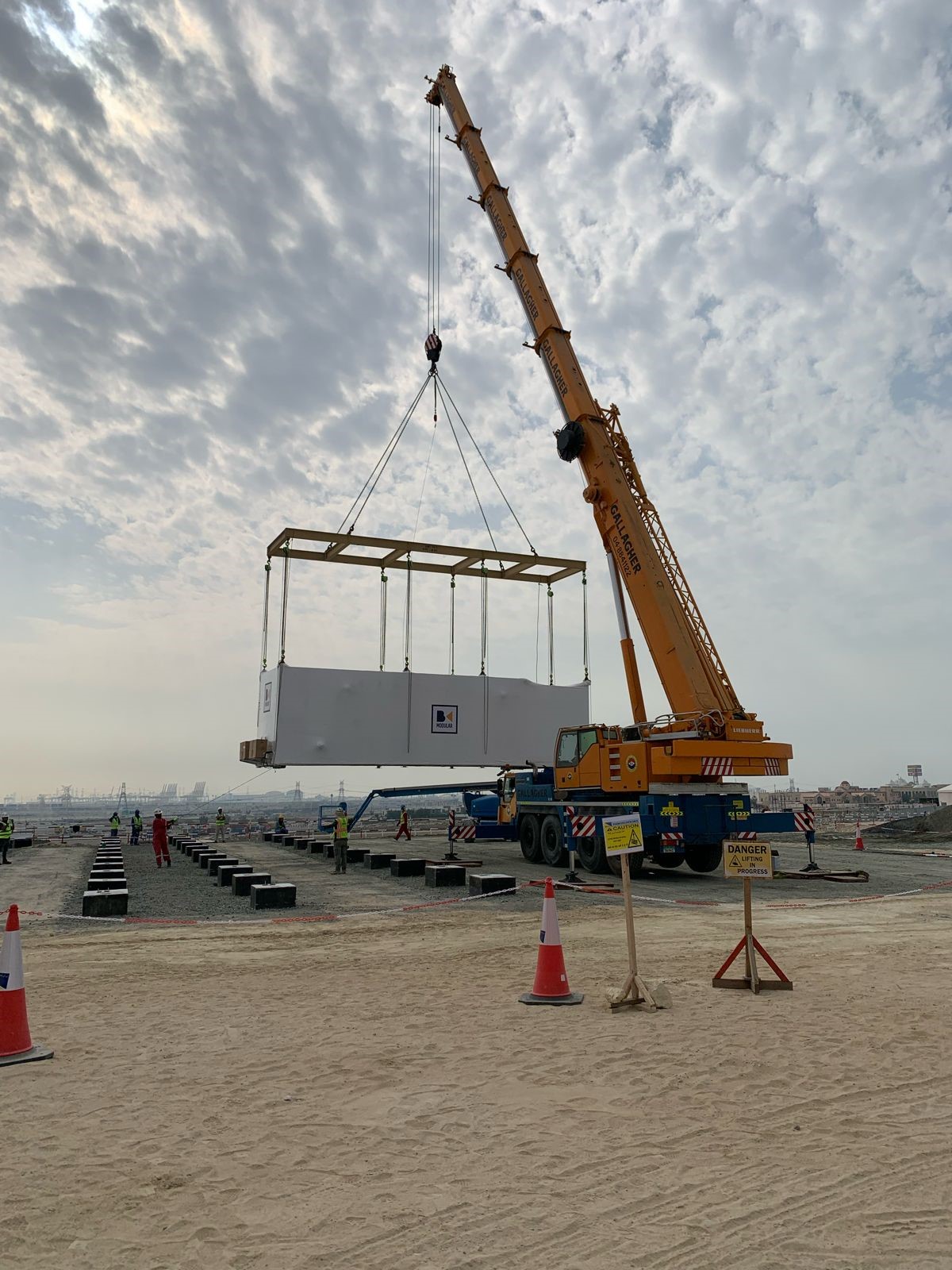
How Sustainable Is MMC? Carbon, Waste and Energy Explained
Is MMC sustainable? Done well, modern methods of construction can cut waste, site emissions and energy use compared with traditional building. Factory production makes materials go further, buildings more airtight and sites cleaner. But MMC is not automatically low carbon: the materials, transport distances and design all matter. This guide explains where the sustainability gains come from and how to make sure your project gets them.
Quick answer
- Less waste: factories cut materials precisely, reuse offcuts and recycle more than a typical site.
- Fewer site emissions: fewer deliveries, shorter programmes and less plant on site.
- Lower energy in use: factory-built walls, floors and junctions are more consistent and airtight, so buildings perform closer to their design.
- Watch the embodied carbon: heavy steel or concrete systems and long transport distances can offset the gains, so measure whole life carbon early.
Why construction’s carbon matters
Buildings and construction account for around 37% of global energy-related CO2 emissions, according to the United Nations Environment Programme’s Global Status Report for Buildings and Construction. That carbon comes from two places:
- Operational carbon: the energy used to heat, cool, light and run the building over its life.
- Embodied carbon: the emissions from making, transporting and installing materials, plus maintenance, replacement and eventual demolition.
As buildings become more energy efficient, embodied carbon becomes a bigger share of the total. MMC can help with both.
Where MMC delivers sustainability gains
1. Less waste
In a factory, materials are ordered to exact quantities, cut by machine and stored indoors, so less is damaged or thrown away. Offcuts can be reused on the next module and waste streams separated for recycling.
2. Fewer site emissions and less disruption
With much of the building made off site, there are fewer deliveries, fewer trades travelling to site and a shorter build. On our Spectrum House scheme, up to 80% of the work was done in the factory and the modules were installed in three weeks.
3. Better energy performance
Factory-made walls, floors and junctions are built to tight tolerances and checked before they leave. That means better airtightness and insulation continuity, and a smaller gap between designed and actual energy use.
4. Lower-carbon materials
Many MMC systems use timber, such as timber frame, cross-laminated timber and structural insulated panels (SIPS). Timber stores carbon and generally has lower embodied carbon than steel or concrete. Our Mercure Oxford Eastgate extension uses SIPS panels.
5. Reuse and adaptability
Buildings designed for disassembly can be taken apart, moved or reconfigured. Volumetric modules and factory-built lodges, such as our Samlingen lodges, can in principle be relocated rather than demolished.
Where MMC can fall short
- Heavier systems: steel and concrete modules can carry significant embodied carbon, especially with double walls and floors.
- Transport: a factory a long way from site adds emissions. Distance should be part of manufacturer selection.
- Short design life: a building that cannot be adapted or maintained easily loses its carbon advantage.
How to make your MMC project genuinely low carbon
- Measure whole life carbon from feasibility, and compare MMC systems on embodied and operational carbon, not just cost. In London, larger schemes already need a whole life-cycle carbon assessment under the London Plan.
- Choose the right system: timber-based panels or hybrids often have lower embodied carbon than heavy volumetric systems. See choosing an MMC system.
- Design efficient layouts on the system’s grid to avoid wasted space and material.
- Specify a fabric-first envelope and low-carbon heating, such as heat pumps.
- Ask manufacturers for data: environmental product declarations, factory waste figures and transport distances.
- Design for disassembly and adaptation so the building can be reused rather than demolished.
Frequently asked questions
Is modular construction more sustainable than traditional construction?
Usually for waste, site emissions and energy performance. Embodied carbon depends on the system and materials, so compare options with a whole life carbon assessment.
Which MMC system has the lowest carbon?
Timber-based panelised systems often perform well on embodied carbon. The best choice depends on height, fire strategy, site and building type.
Can MMC help achieve net zero?
Yes. High-performance factory-built envelopes make very low energy use easier to achieve. Read zero carbon buildings and MMC and sustainable design with MMC, or our full guide to modern methods of construction.
Want a lower-carbon scheme? Book a free feasibility study, contact us or call 020 4526 8965.