




PAS 9980 Explained: What It Means for Cladding Remediation
If your block of flats has combustible materials in its external walls, PAS 9980 is the document that shapes what happens next. It does not start from “take the cladding off”. It asks how much risk the wall poses to the people living in the building, and whether that risk is tolerable.
Updated November 2026, to reflect the revised PAS 9980 published in September 2026.
This guide explains what PAS 9980 is, what the risk ratings mean, and how they affect a remediation project. We use our own project at City Reach, Buckle Street in Aldgate, as a worked example.
What is PAS 9980?
PAS 9980 is a code of practice published by BSI for the fire risk appraisal of external wall construction and cladding on existing blocks of flats. It was first published in January 2022, and a revised edition was published in September 2026.
It sets out how to carry out a fire risk appraisal of external walls (FRAEW). The appraisal is done by a competent fire engineer or another suitably qualified building professional. It applies to purpose-built blocks of flats and to similar buildings, such as student accommodation and buildings converted into flats.
An FRAEW is not only for tall buildings. A block of any height may need one if there is reason to think its external walls could spread fire.
What does an FRAEW look at?
The assessor looks at the whole wall and the building around it, not just a list of materials. PAS 9980 groups the main factors under three headings:
- Fire performance – how the cladding, insulation, cavity materials and other components behave in a fire
- Façade configuration – how the wall is built and arranged, including cavity barriers, openings, balconies and the extent of combustible materials
- Fire strategy and fire hazards – the building’s height, evacuation strategy, sprinklers, alarms, and what could start a fire next to the wall
These are weighed together to reach an overall risk outcome for the building.
The four risk outcomes
Under current government guidance, an FRAEW gives one of four outcomes:
- Low – the wall is unlikely to contribute to fire spread. No remediation is needed.
- Tolerable – there is some risk, but fire spread is expected to be limited or suitable mitigation is in place. No immediate action is needed, although the report may suggest future improvements.
- Medium – action is needed to reduce the risk.
- High – action is needed to reduce the risk, and the report should set out the options, which may include removing or replacing some or all of the cladding.
The key principle is proportionality. The revised PAS 9980 makes clear that remediation should match the level of risk, rather than being a blanket removal or replacement of cladding. A wall that does not meet today’s standards for new buildings can still be assessed as tolerable.
PAS 9980, EWS1 and your fire risk assessment
Three documents often get confused:
- Fire risk assessment (FRA) – the building’s overall fire risk assessment, which the responsible person must keep up to date
- FRAEW – the detailed appraisal of the external walls, carried out under PAS 9980. Its outcome feeds into the FRA
- EWS1 form – a form used by mortgage lenders and valuers. It is about valuation, not a full assessment of risk to life
Where an architect fits in
The fire engineer assesses the risk. The architect designs the works that bring the building to an acceptable outcome, and makes sure they can actually be built, approved and paid for.
On a remediation project, that usually means:
- testing options against the target outcome, not just pricing full replacement
- designing the new wall build-up, cavity barriers, fire-stopping and details
- for higher-risk buildings (at least 18 metres or seven storeys, with at least two homes), applying to the Building Safety Regulator for building control approval before work starts (Gateway 2) and for a completion certificate at the end (Gateway 3)
- managing the contract and keeping the golden thread of information up to date
Case study: City Reach, Buckle Street, Aldgate
City Reach is an eight-storey residential building on Buckle Street and Leman Street in Aldgate, with flats above a basement office and restaurant. As a building over seven storeys with homes in it, it is a higher-risk building, so the remediation needed building control approval from the Building Safety Regulator.
The problem
The external walls contained combustible cladding, insulation and timber balcony decking. Once the walls were opened up, the scope went beyond the visible render: combustible materials ran through the cavities of the external wall system. The building also has a combustible timber frame.
A proportionate approach
Rebuilding the frame to full compliance with today’s standards for new buildings would have been very costly and highly disruptive for residents. Instead, we designed a solution aimed at a tolerable risk outcome under PAS 9980:
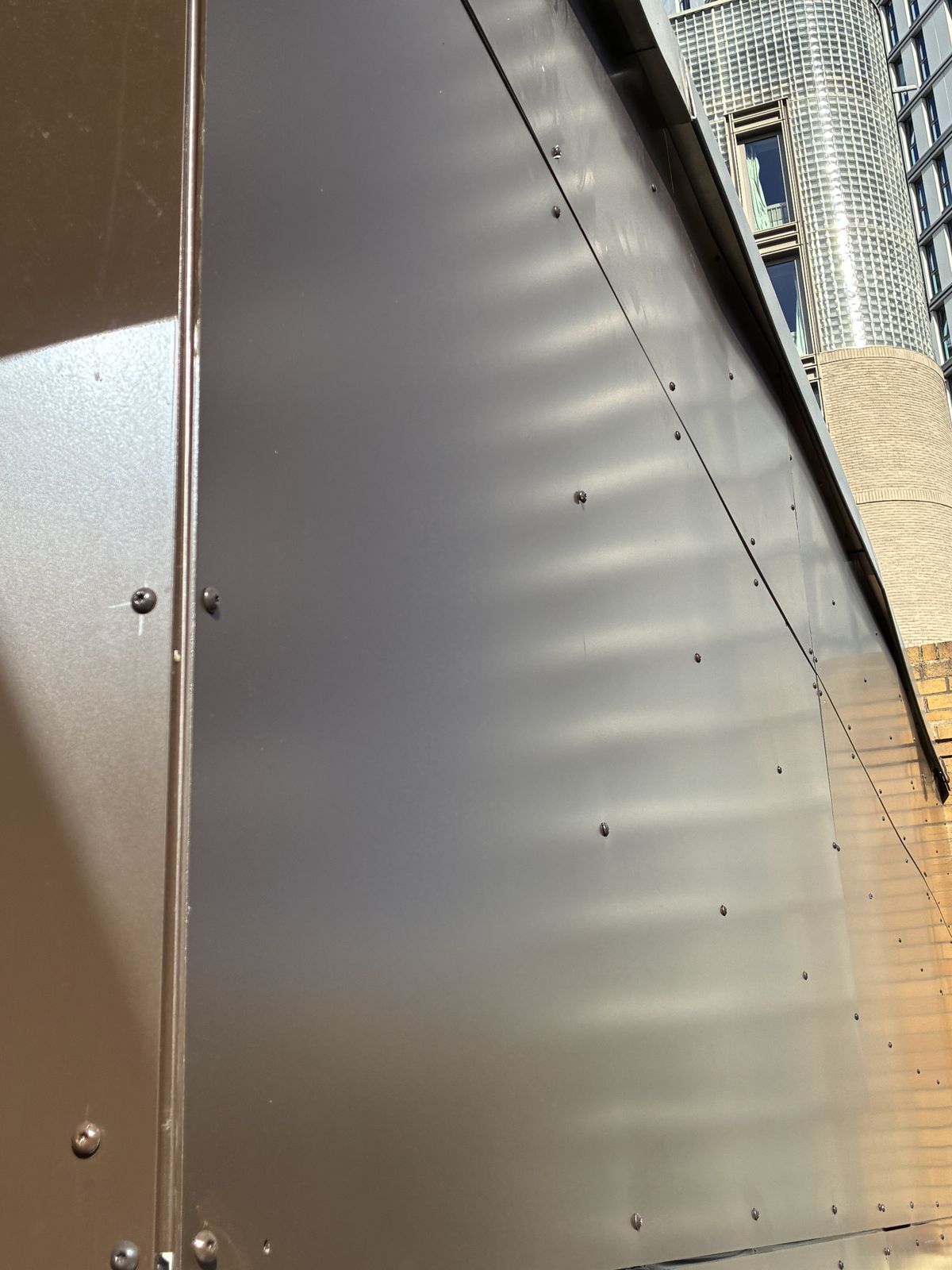
- combustible cladding, insulation and cavity materials removed and replaced with a non-combustible, A2-rated rainscreen system
- the existing timber frame kept and over-clad with fire board
- new cavity barriers, fire-stopping and cavity closers
- timber balcony decking replaced with aluminium
This dealt with the risk where it mattered, saved our client a significant amount compared with full replacement, and allowed residents to stay in their homes throughout the works.
Milestones
- March 2026 – Gateway 2 approval from the Building Safety Regulator
- June 2026 – works start on site
- October 2026 – cladding installation complete; completion notice issued on 23 October
- Gateway 3 – completion application submitted, with as-built information and the golden thread for the building
Studio Anyo is architect and lead designer, BSR applicant and contract administrator for our client Esade International Ltd, working with Bakers Construction Services, OFI Contracts, Ashton Fire and Kempton Smith. Read more in our City Reach project update.
If your building has an FRAEW: what to do next
- Read the executive summary. It should state the risk outcome, the reasons for it and the recommended action.
- Check the assumptions. A tolerable outcome can depend on assumptions about hidden materials or details. If an assumption turns out to be wrong, the outcome could change.
- Price options against the target outcome. Ask what it would take to reach a tolerable or low outcome, not just what full replacement would cost.
- Plan for the Building Safety Regulator. If the building is higher-risk, work cannot start until Gateway 2 approval is in place, so build the application into the programme early.
- Check funding. Government schemes, such as the Cladding Safety Scheme, may cover eligible remediation costs.
Frequently asked questions
Is PAS 9980 a legal requirement?
PAS 9980 is a code of practice, not a law. But it is the recognised method for appraising the fire risk of external walls on existing blocks of flats in England, and government guidance points assessors to it. Building owners use the outcome to meet their duties under fire safety law.
Does a medium risk rating mean the cladding has to come off?
Not necessarily. A medium or high outcome means action is needed to reduce the risk, but the action should be proportionate. That might mean replacing some materials, adding cavity barriers and fire-stopping, or other measures, rather than stripping the whole wall.
What is the difference between PAS 9980 and an EWS1 form?
An FRAEW carried out under PAS 9980 assesses the risk to life from fire spreading over the external walls. An EWS1 form is a valuation tool for mortgage lenders. The FRAEW is the more detailed assessment, and its outcome can inform an EWS1.
Does PAS 9980 only apply to buildings over 18 metres?
No. An FRAEW can be needed for a block of flats of any height. In practice, lower buildings are more likely to reach a low or tolerable outcome, but height alone does not decide it.
Need help with cladding remediation?
We help building owners and managing agents turn an FRAEW into a proportionate, buildable remediation scheme, and take it through the Building Safety Regulator from Gateway 2 to completion. See our cladding remediation service, contact us or call 020 4526 8965.
Sources: BSI, PAS 9980 (2022, revised September 2026); GOV.UK, Understanding fire risk appraisals of external walls in blocks of flats; Building Safety Regulator guidance on building control for higher-risk buildings.